Miles O’Brien:
Well, Casey, maybe if we listen very quietly, we might be able to hear number one, which is, drumroll please, the hum of the universe, the hum of the universe.
The NANOGrav Observatory was able to pick up these waves detected by studying rapidly spinning dead stars, giant ripples in space-time and maybe, maybe might get us a little closer to the elusive hunt for dark matter, which is one of those things that just we know is out there, but we haven't been able to find it.
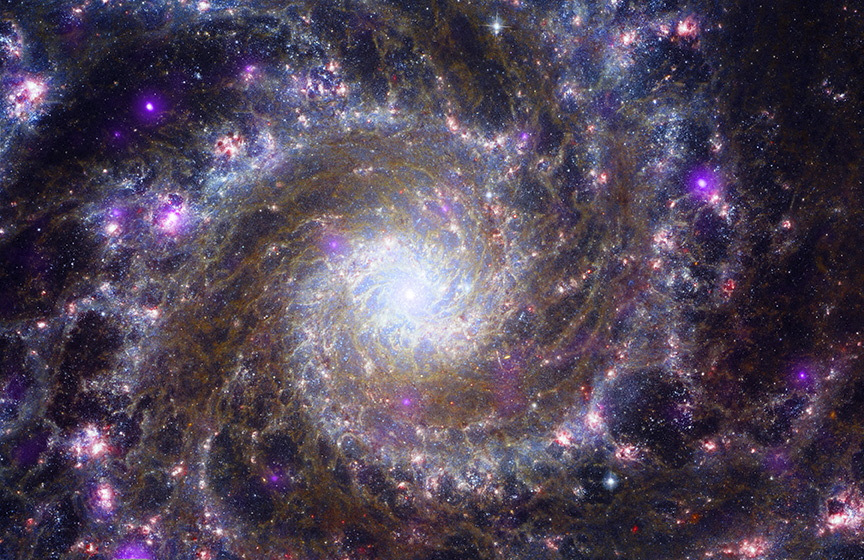
The James Webb Space Telescope, wow, there are so many observations, so many amazing images. Fundamentally, James Webb is rewriting the astronomy textbooks right now, and it's changing a lot of theories about how the universe was formed, how it expanded, and why we're sitting here talking to each other, for that matter.
OSIRIS-REx, love that mission. Hope you had a chance to follow it. It went off to the asteroid Bennu, which, by the way, is — Bennu's a potential threat to Earth in a couple of decades, if we don't watch it carefully. It will come pretty close.
OSIRIS-REx, that was part of its mission to understand what Bennu is made of, so, if we did have to deflect it, we would know exactly what to do.
ncG1vNJzZmivp6x7sa7SZ6arn1%2Bjsri%2Fx6isq2ejnby4e8Bmo6inm2KutXmRaWlsq12ZtrSvzq%2Bcq6GVqHqquoysp5qblWKyubzLqKmarJmkuw%3D%3D